Kenya park guide · Tsavo East National Park
Kenya's largest national park. Endless red earth, dust-red elephants, the Galana River and the land of the legendary Man-Eaters of Tsavo.
Kenya's biggest park
Tsavo East National Park was gazetted in April 1948 and covers 13,747 km² of dry plains, scrub and river forest in south-east Kenya. With Tsavo West next door, it forms one of the largest protected areas in Africa.
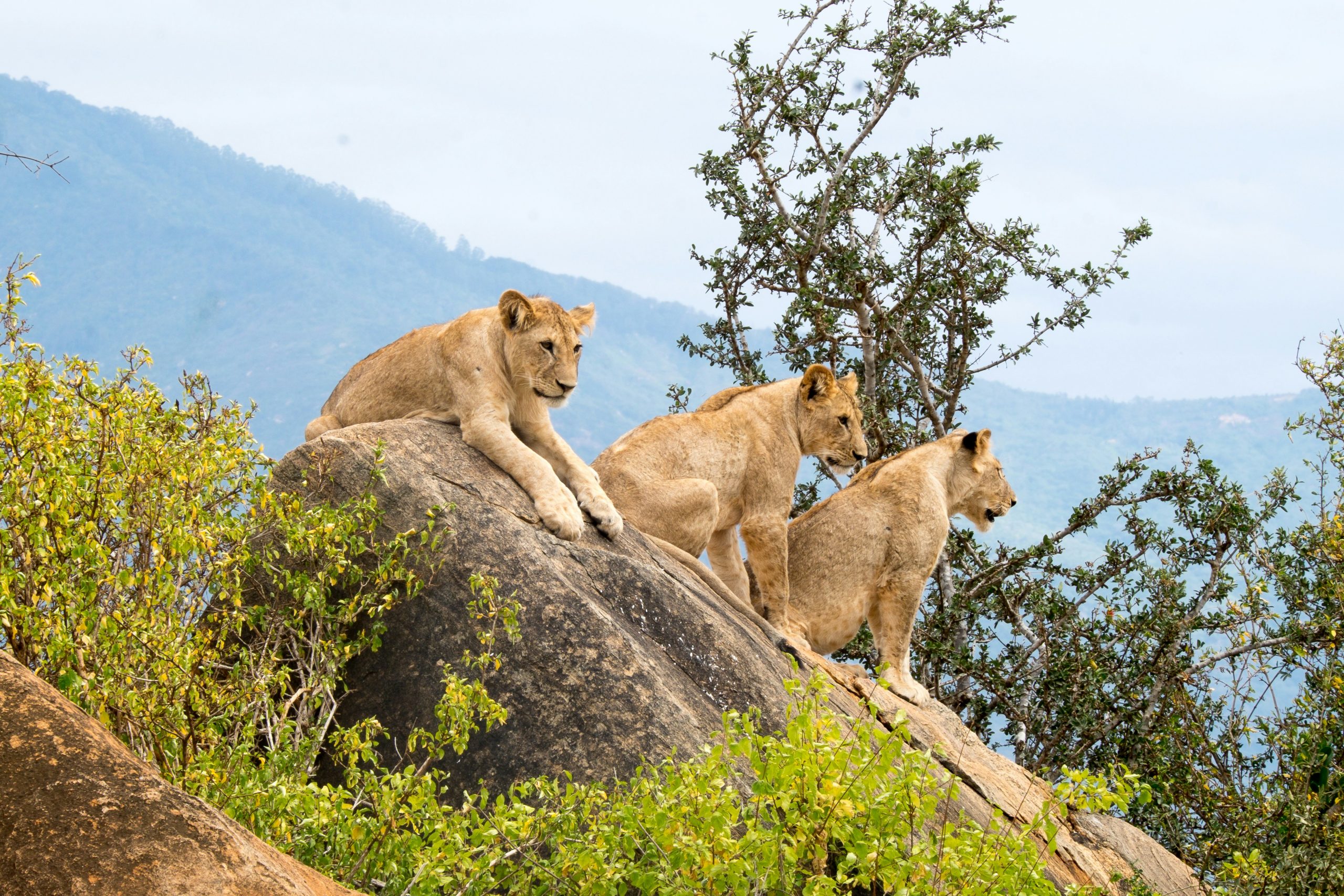
It is a park of huge distances and wide skies. Herds of red elephants move between water points, maneless lions rest in the shade, and you can drive for an hour without seeing another vehicle. The Galana River and the Yatta Plateau break up the flat land, and the park is home to more than 500 bird species.
Tsavo East sits between Nairobi and the coast, so it is the easiest big park to add to a beach holiday in Mombasa, Diani or Watamu.
Tsavo East alone is about nine times the size of the Masai Mara National Reserve.
The red elephants of TsavoSignature sight
Tsavo East has some of the largest elephant herds in Kenya, and they look rust-red. Under the dust they are ordinary grey African elephants. The colour comes from the soil.
Best place to see them: at Aruba Dam, Mudanda Rock and the Galana River in the dry months, when herds come to drink and bathe.
Signature route
A classic day in Tsavo East links its great natural landmarks, from the dam near Voi Gate to the rapids of the Galana River.
Built in 1952 on the Voi River. Its reservoir draws elephants, buffalo and waterbirds in the dry season.
A 1.6 km long rock ridge that collects rainwater in a pool below. A classic spot to watch elephants drink.
One of the world's longest lava flows, about 290 km, running along the park's western edge.
The park's lifeline, lined with doum palms, with crocodiles, hippos and herds coming down to drink.
White-water rapids where the Galana cuts through bands of rock. Named after Frederick Lugard.
Legend of Tsavo
In 1898, while the Uganda Railway was being built across the Tsavo River, two maneless male lions began attacking the workers' camps at night. Over about nine months they killed many railway workers, and at one point work on the bridge stopped, until Lieutenant Colonel John Henry Patterson shot them.
Their story became the book The Man-Eaters of Tsavo and the film The Ghost and the Darkness. Many male lions in Tsavo today still have short or no manes, a trait linked to the hot climate.
Wildlife
Elephant, lion, buffalo and leopard live here, plus dry-country specialists you will not see in the Mara. Black rhinos live in the wider Tsavo area but are very rarely seen.


Best time to visit
Tsavo East is hot and dry for most of the year, so you can visit any month. The dry seasons give the easiest game viewing.
Best game viewing. Animals gather at the river and dams.
Hot and dry, with good viewing and fewer visitors.
Green and quiet. Lower lodge rates, some muddy tracks.
Fresh grass, newborn animals and migrant birds.
Practical information
About 330 km from Nairobi to Voi Gate on the Mombasa highway, 5 to 6 hours. From Mombasa it is about 2 to 3 hours, from Diani or Watamu a little longer.
The Madaraka Express from Nairobi or Mombasa stops at Voi. We can meet you at the station and start your game drive from there.
Voi Gate is the most used. Manyani and Mtito Andei gates are on the Nairobi side, Buchuma near the coast, and Sala Gate for the Galana River and Malindi.
Lodges and tented camps near Voi, on the Galana River and around the park, from budget camps to lodges overlooking waterholes.
Per person, per 24 hours. In force since 1 October 2025.
| Visitor | Adult | Child |
|---|---|---|
| Non-resident | US$80 | US$40 |
| Kenya resident | KSh 1,350 | KSh 675 |
| EA citizen | KSh 1,000 | KSh 500 |
Children are aged 5 to 17. Gates open 6:00 am – 6:00 pm. Fees can change; we confirm them in your quote.
Safari packages
Private safaris that include Tsavo East. Prices are per person, and we can also plan a short safari from Mombasa or the south coast. See all Kenya safaris


Good to know
Have another question? Ask our Nairobi team on WhatsApp
Tsavo East covers 13,747 km², making it the largest national park in Kenya. Together with Tsavo West it protects about 22,000 km², roughly 4% of the country.
Tsavo's elephants are grey like any other, but they dust-bathe and spray themselves with the park's red, iron-rich soil. The dust protects their skin from sun and insects and gives them their famous red colour.
The dry seasons, June to October and January to February, are best. Animals gather at the Galana River, Aruba Dam and Mudanda Rock, and the bush is thin, so wildlife is easier to see.
By road it is about 330 km from Nairobi to Voi Gate, 5 to 6 hours. From Mombasa and the south coast it is about 2 to 3 hours. The Madaraka Express train also stops at Voi, close to the park.
Under the Kenya Wildlife Service fees in force since 1 October 2025, non-resident adults pay US$80 and children US$40 per 24 hours. Kenya residents pay KSh 1,350 and East African citizens KSh 1,000 per adult.
Two maneless male lions that killed many railway workers while the Uganda Railway bridge over the Tsavo River was being built in 1898. They were shot by Lieutenant Colonel John Henry Patterson, and their story inspired books and films.
Yes. Tsavo East is the closest big park to Mombasa, Diani and Watamu, so a two or three day safari from the coast, or a safari followed by beach days, is easy to arrange.
Tell us your dates and budget. Our Nairobi team will plan a private safari in our own 4x4 Land Cruisers and send a free quote.