Phronesis Tours

Central Kenya · UNESCO World Heritage Site

Mount Kenya National Park Guide

Trek Africa's second-highest mountain. Walk through forest and giant lobelias to Point Lenana at 4,985 m and watch the sun rise over glaciers on the equator.

  1. 5,199 mBatianTechnical climb
  2. 5,188 mNelionTechnical climb
  3. 4,985 mPoint LenanaTrekkers' summit
Photo: Mara008, CC BY-SA 4.0

Africa's second-highest mountain

Why visit Mount Kenya National Park?

  • 1949national park
  • 1997UNESCO listed
  • ~200 kmfrom Nairobi

Mount Kenya is an ancient extinct volcano that rises alone from the farmland of central Kenya, just south of the equator. The country takes its name from the mountain.

The national park protects everything above the forest line: bamboo, high moorland, glacier-carved valleys, deep blue tarns and the jagged rock peaks at the top. It became a UNESCO World Heritage Site in 1997.

You do not need to be a climber to enjoy it. Fit walkers can trek to Point Lenana with a guide, while others come for a day walk, a forest lodge stay or views of the peaks at sunrise from Nanyuki.

Signature view

Three summits, one mountain

The two highest peaks are steep rock towers for skilled climbers. The third, Point Lenana, is the goal of almost every trekker.
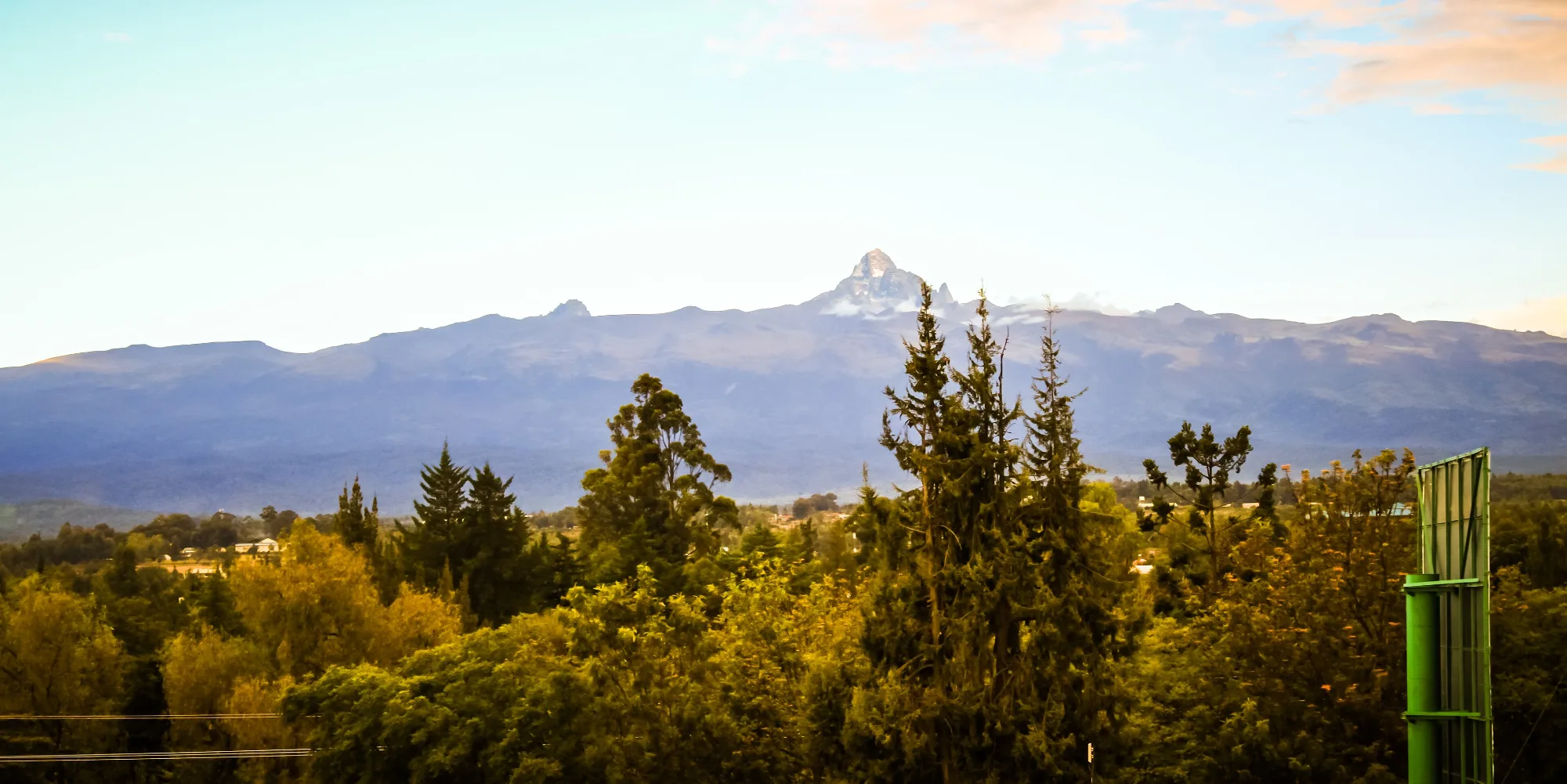
BATIAN 5,199 mNELION 5,188 mPOINT LENANA 4,985 m
Mount Kenya seen from NanyukiPhoto: Don Elvis Muraya, CC BY-SA 4.0

Choose your way up

Mount Kenya trekking routes

Three main routes lead to Point Lenana. Many treks go up one route and down another, so you see more of the mountain.

North side

Sirimon route

Gentle, steady climb through forest and open moorland, with the best acclimatisation. Our favourite route for first-time trekkers.

Steepness
Scenery
East side

Chogoria route

The most beautiful route, past the Gorges Valley, Lake Michaelson and Vivienne Falls. Longer drive to the gate but worth it.

Steepness
Scenery
West side

Naro Moru route

The shortest and steepest route, crossing the famous "vertical bog". Best for fit trekkers short on time.
Steepness
Scenery
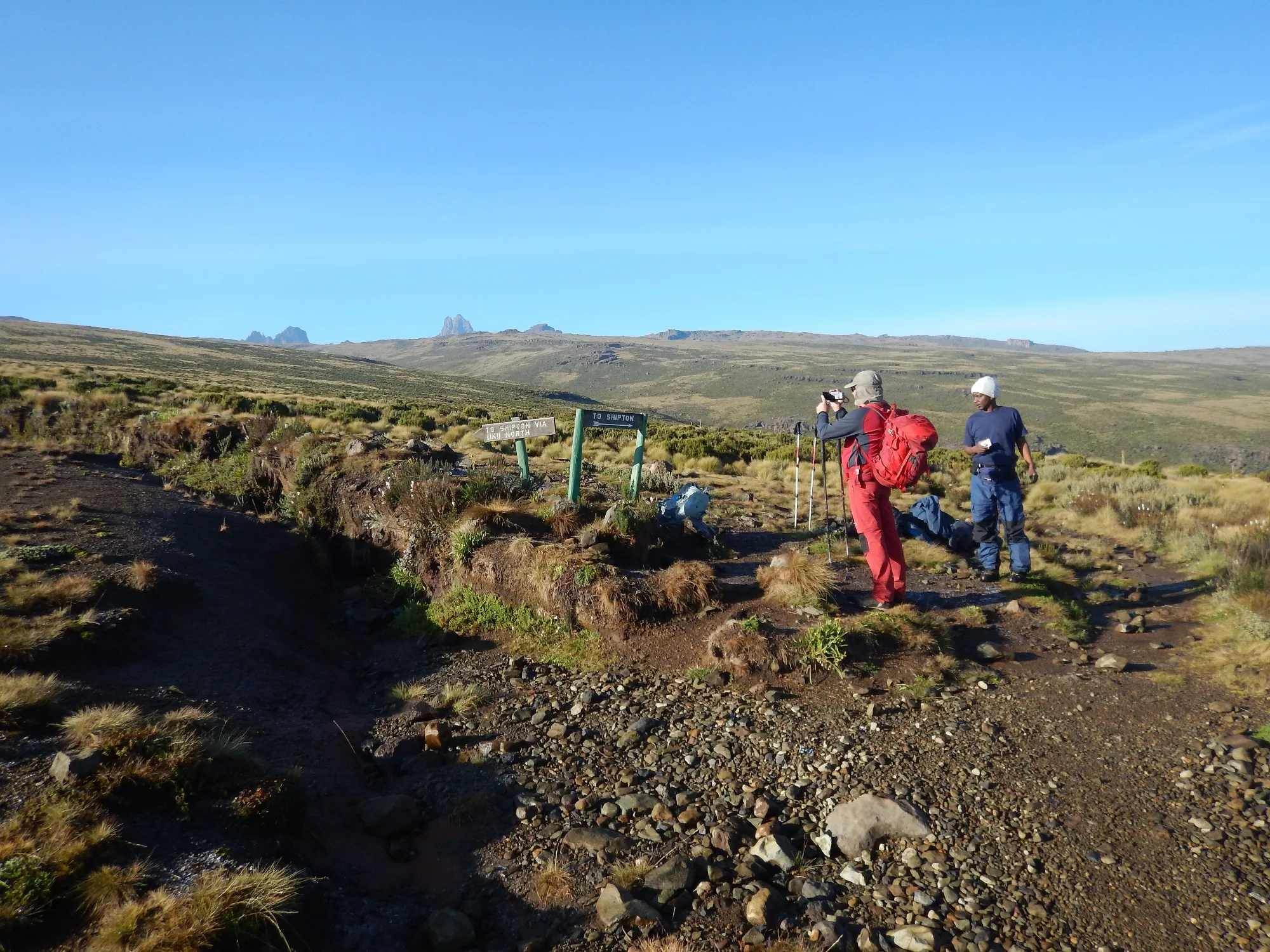
Hikers on the Sirimon route, Mount Kenya
Sirimon route
Photo: Mara008, CC BY-SA 4.0
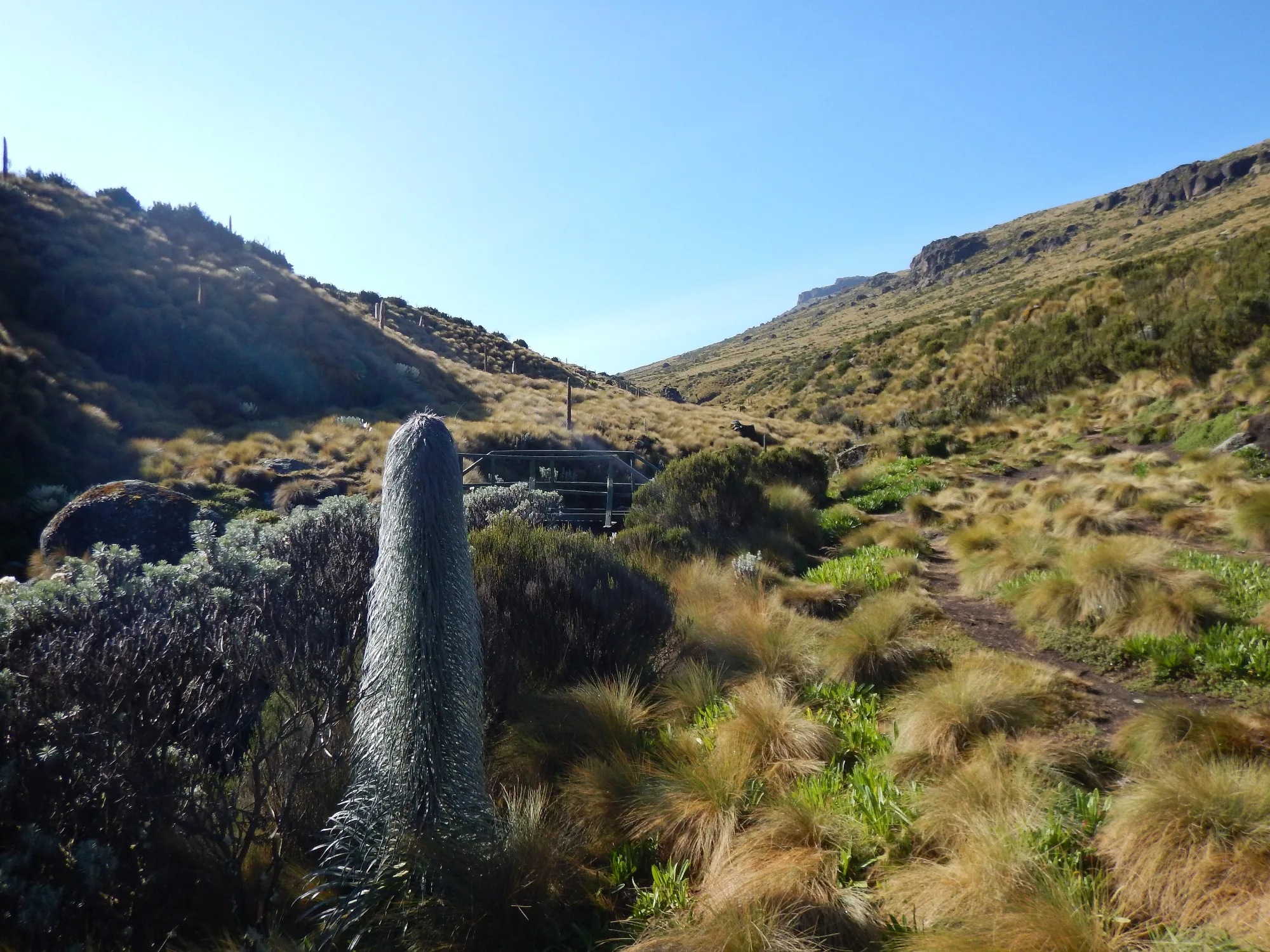
Liki Valley on Mount Kenya
Liki Valley
Photo: Mara008, CC BY-SA 4.0

Sample itinerary

A 4-day trek to Point Lenana

Our classic Sirimon trek. We can add a rest day for acclimatisation or descend by Chogoria for a 5-day traverse.

Get a quote
  1. Day 1
    2,650 m → 3,300 m

    Sirimon Gate to Old Moses Camp

    Drive from Nanyuki to the gate and walk up through forest into the moorland.

  2. Day 2
    3,300 m → 4,200 m

    Through Mackinder Valley

    A long, beautiful day past giant groundsels and lobelias to Shipton's Camp below the peaks.

  3. Day 3
    4,200 m → 4,985 m

    Summit Point Lenana

    Start before dawn to reach the top for sunrise over the glaciers, then descend.

  4. Day 4
    → 2,600 m

    Down and out

    Walk down to the gate and drive back to Nanyuki for a hot shower.

Wildlife & plants

Life on the mountain

Each band of altitude has its own world, from elephants in the forest to strange giant plants found only on East Africa's high mountains.
Lake Alice on Mount Kenya
Tarns and glacial lakesLake Alice, Lake Michaelson and dozens of small tarns fill the old glacier valleys.
Photo: Weldon Kennedy, CC BY 2.0
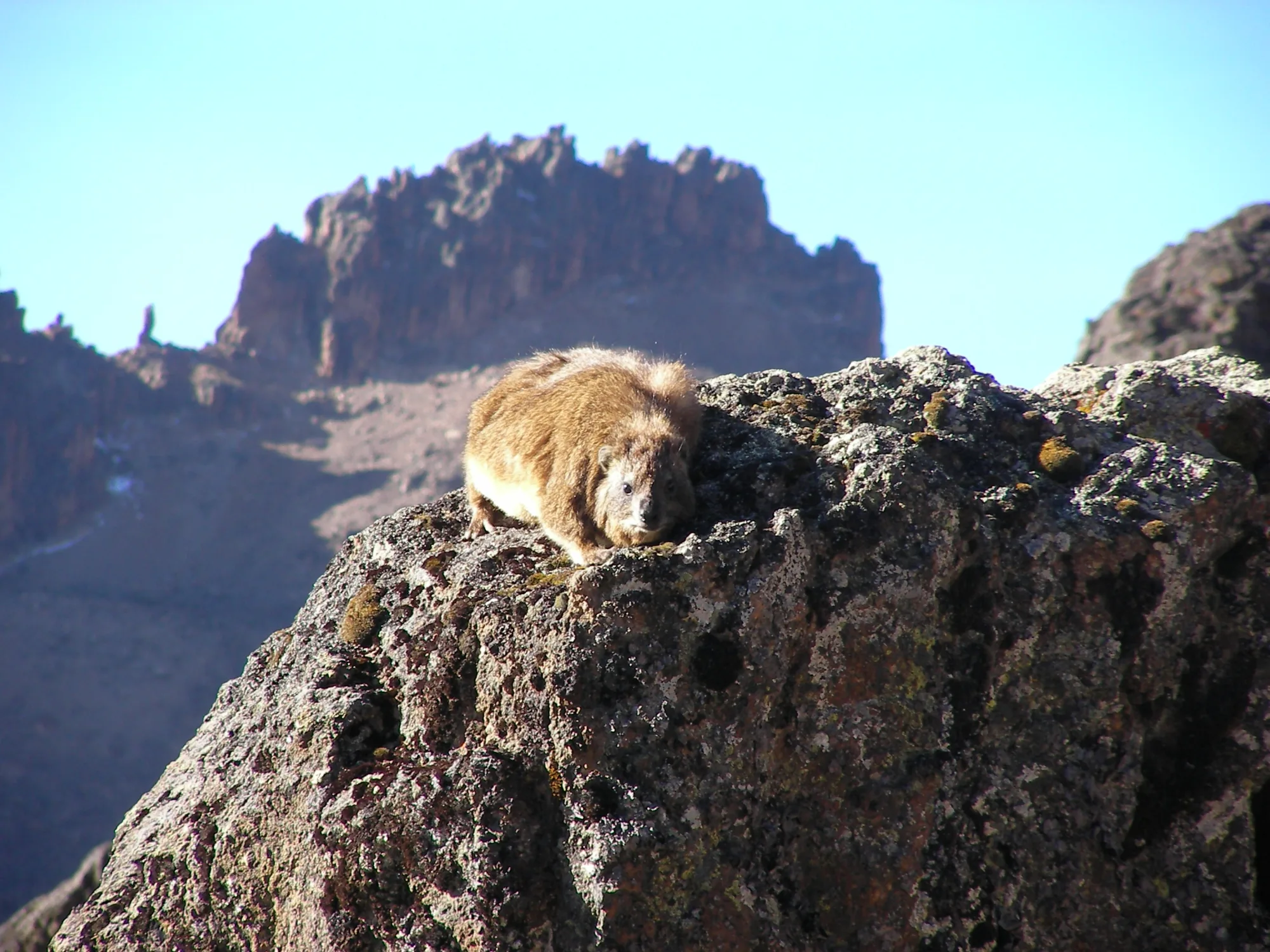
Rock hyrax in Mount Kenya National Park
Rock hyraxTame and curious, they live around the high camps.
Photo: joxeankoret, CC BY-SA 2.0

Giant plants

Above 3,500 m the moorland is dotted with giant groundsels that grow taller than a person, and giant lobelias that close their leaves at night against the frost.

Forest animals

Elephants, buffalo, colobus and Sykes's monkeys, bushbuck and giant forest hog live in the lower forest, and are often seen around the lodges.

  • Elephant
  • Buffalo
  • Colobus monkey
  • Sykes's monkey
  • Bushbuck
  • Giant forest hog
  • Jackson's francolin
  • Scarlet-tufted sunbird

Practical information

Plan your climb and park fees

Getting there

About 200 km and 3.5 to 4 hours from Nairobi to Nanyuki or Naro Moru, the main gateway towns. We pick you up in Nairobi.

Best time

January to February and late June to October are driest, with the clearest summit views. Avoid the long rains of April and May.

What to bring

Warm down layers, a waterproof jacket, gloves, a hat, a head torch and broken-in hiking boots. Nights near the peaks fall below freezing.

Altitude

Go slowly, drink plenty of water and tell your guide if you feel unwell. A rest day helps your body adjust before the summit.

KWS park fees

Per person, per day, since 1 October 2025.

VisitorAdultChild
Non-residentUS$70US$35
Kenya residentKSh 1,100KSh 550
EA citizenKSh 800KSh 400

Children are aged 5 to 17. Guides, porters, huts and fees can change; we confirm them in your quote.

Good to know

Mount Kenya FAQs

Planning a climb? Our Nairobi team replies quickly on WhatsApp.

Ask on WhatsApp

How high is Mount Kenya?

Mount Kenya is the second-highest mountain in Africa. Its highest peak, Batian, reaches 5,199 m, with Nelion close behind at 5,188 m. Point Lenana, at 4,985 m, is the highest point you can reach on a trek without technical climbing.

Can beginners climb Mount Kenya?

Yes. Fit beginners can trek to Point Lenana with a guide and porters, with no ropes or climbing experience needed. Batian and Nelion are technical rock climbs for experienced climbers only.

How many days do you need to climb Mount Kenya?

Most treks to Point Lenana take 4 to 5 days. A slower itinerary gives your body more time to adjust to the altitude and makes the summit morning easier and safer.

Which is the best route up Mount Kenya?

Sirimon is the gentlest and best for acclimatisation, Chogoria is the most scenic, and Naro Moru is the shortest and steepest. A popular choice is to go up Sirimon or Chogoria and come down a different route.

When is the best time to climb Mount Kenya?

The driest months, January to February and late June to October, give the clearest views and the best trail conditions. The long rains of April and May and the short rains of November make the trails wet and the summit cloudy.

How much are Mount Kenya park fees?

Under the Kenya Wildlife Service fees in force since 1 October 2025, non-resident adults pay US$70 and children US$35 per person per day. Kenya residents pay KSh 1,100 and East African citizens KSh 800 per adult per day.

Do I need to worry about altitude sickness?

Altitude sickness can affect anyone above about 3,000 m, regardless of fitness. Climb slowly, drink plenty of water and tell your guide if you have a bad headache or nausea. Our itineraries include extra time to acclimatise.

Stand on Point Lenana at sunrise

Tell us your dates and fitness level. We will plan the right route, guides and porters, and send a free quote.